
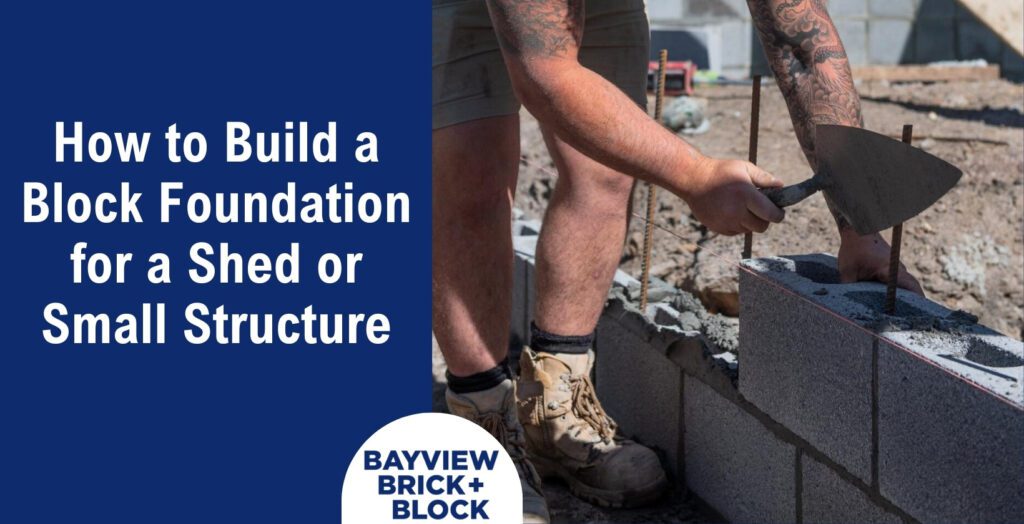
You can build a block foundation for a shed or small structure by selecting the right materials and ensuring a stable base. A well-prepared site prevents movement and cracking, while precise alignment keeps everything level. Expert blocklaying companies know that sturdy blocks, compacted footing, and proper mortar application create a solid foundation that lasts.
This guide covers block selection, site preparation, laying techniques, and essential waterproofing methods to protect against moisture damage.
How to Choose the Right Blocks for Foundation Work
Here’s how you can choose the right blocks for foundation works:
- Select the right strength: Blocks must handle load-bearing pressure without cracking. Look for units rated for structural use to maintain integrity.
- Pick the correct size: Standard sizes make alignment easier and reduce cutting. Larger blocks speed up work but require careful handling.
- Choose the right core: Hollow-core blocks allow for steel reinforcement and filled cores. Solid options provide greater mass but can be harder to manoeuvre.
- Check moisture resistance: Quality materials prevent water absorption and deterioration. Consider blocks with added treatments for damp conditions.
- Ensure reinforcement compatibility: Some designs work better with bond beams for added strength. Ensure chosen blocks match planned reinforcement methods.
Waterproofing and Protecting the Foundation
Water can weaken a block foundation, leading to cracks, movement, and long-term damage. To prevent rising moisture, a damp-proof course sits between the first row of blocks and the footing.
A waterproof membrane or bitumen-based sealant on the outer face blocks water from seeping through. Without proper drainage, water builds up around the base, increasing pressure on the structure. Ag pipes and gravel backfill channel excess moisture away, keeping the foundation dry.
Even with good drainage, the surrounding ground must stay stable to prevent shifting. Compacting backfill with soil or crushed rock locks everything in place, reducing movement over time. Flashing at key points helps divert water from vulnerable areas, preventing pooling near the foundation. Regular inspections catch small issues before they turn into major repairs.
With the right protection, the foundation stays solid, keeping the structure secure for years to come.